Geophysical Surveys
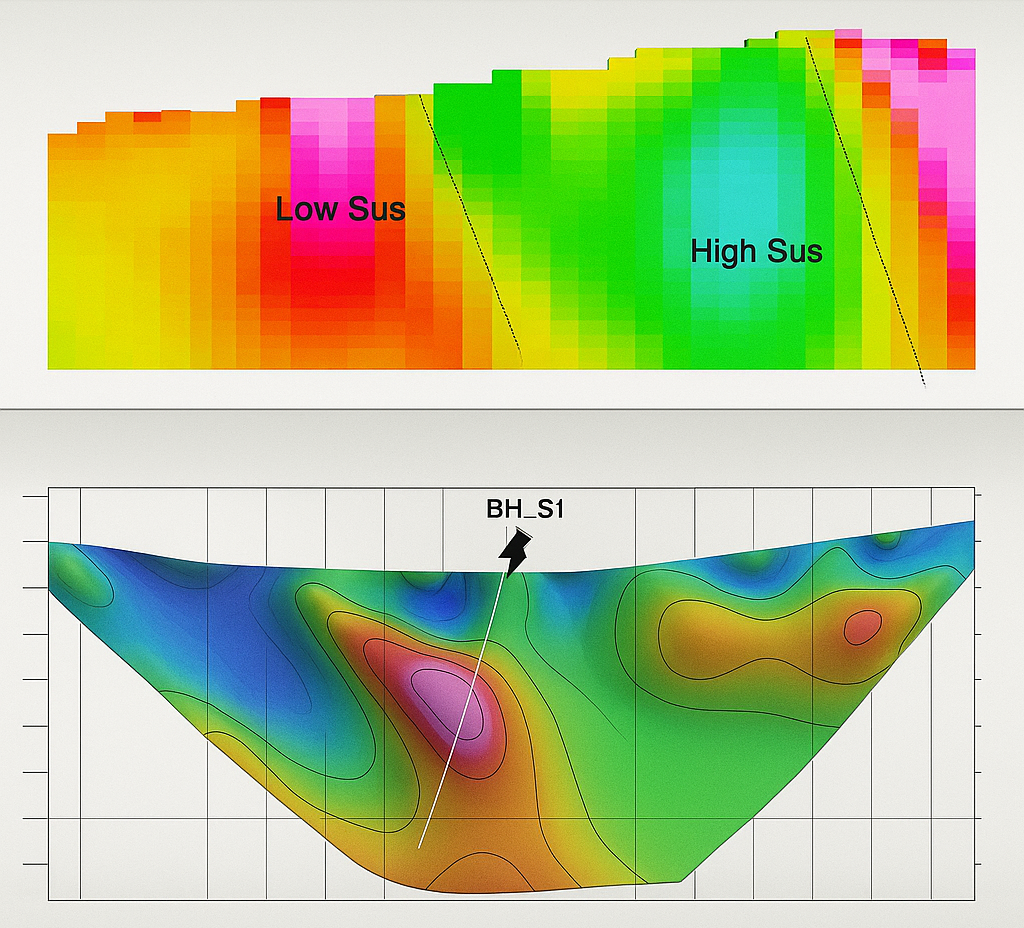
Considering the type of deposit, which has been identified as massive sulfide based on geological surveys, and also by identifying fault structures and magnetic lineaments through magnetometry surveys across the entire area, in the next stage, geophysical studies were conducted using the geoelectric (IP-RS) method to identify areas with sulfide production. In this stage, by surveying about 3200 geoelectric points, veins and areas with sulfide production related to mineralization zones were accurately identified.
Exploratory drilling within the licensed area
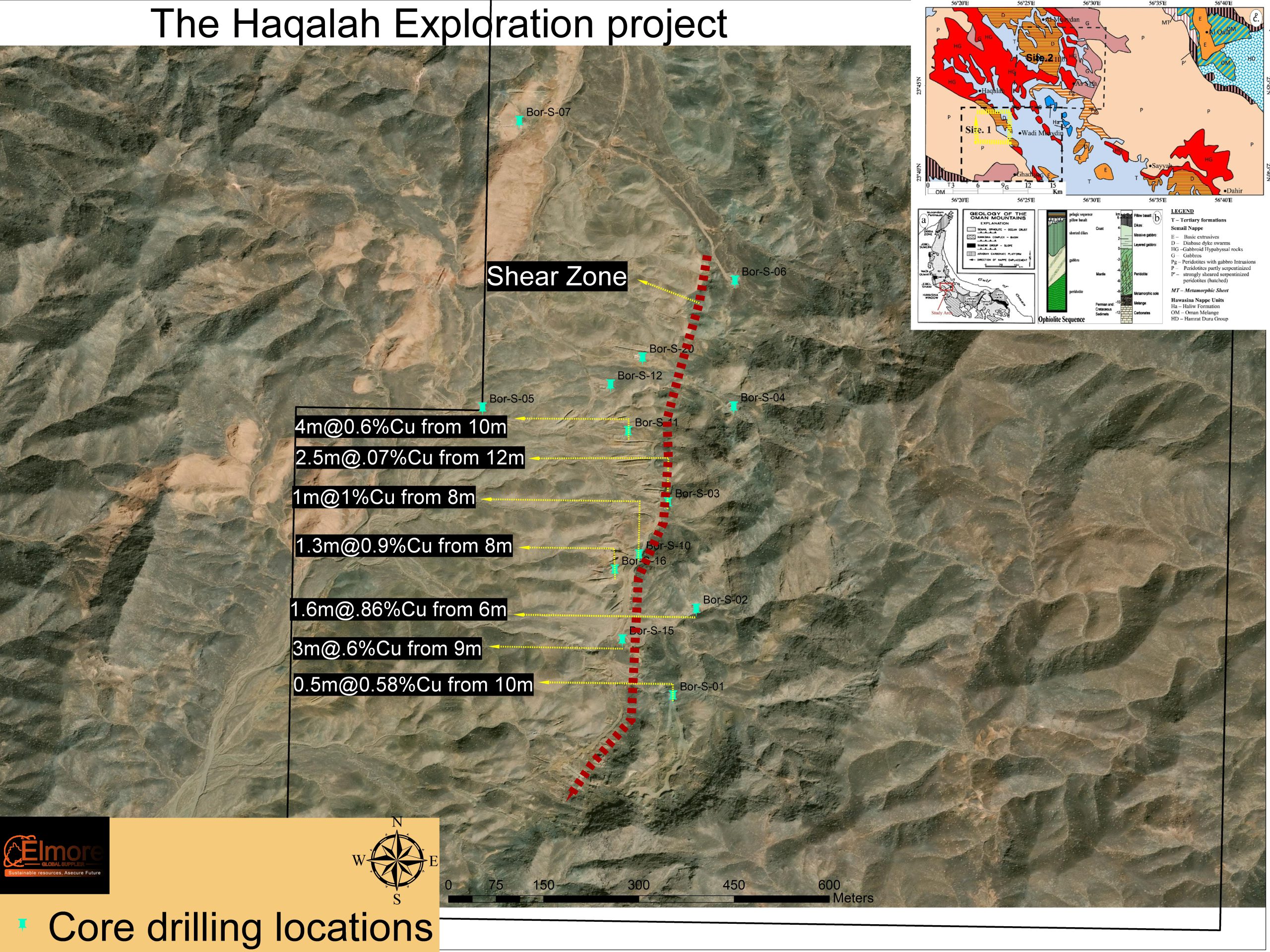
Mineralization in this section has a distinct north-south trend, with the direction of the mineral vein slope towards ultrabasic rocks. According to the logging of the boreholes, chalcopyrite and bornite are the main copper minerals. According to boreholes 1, 2, 4, 10, 11, 14 and 16, which are 70 meters apart, the thickness of the mineralized zone is cut at a minimum of 0.5 meters and a maximum of 4 meters, with a grade range between 0.6 and 1 percent and an average grade of 0.8 percent. Structurally, this lens also extends eastward.