Geophysical Surveys
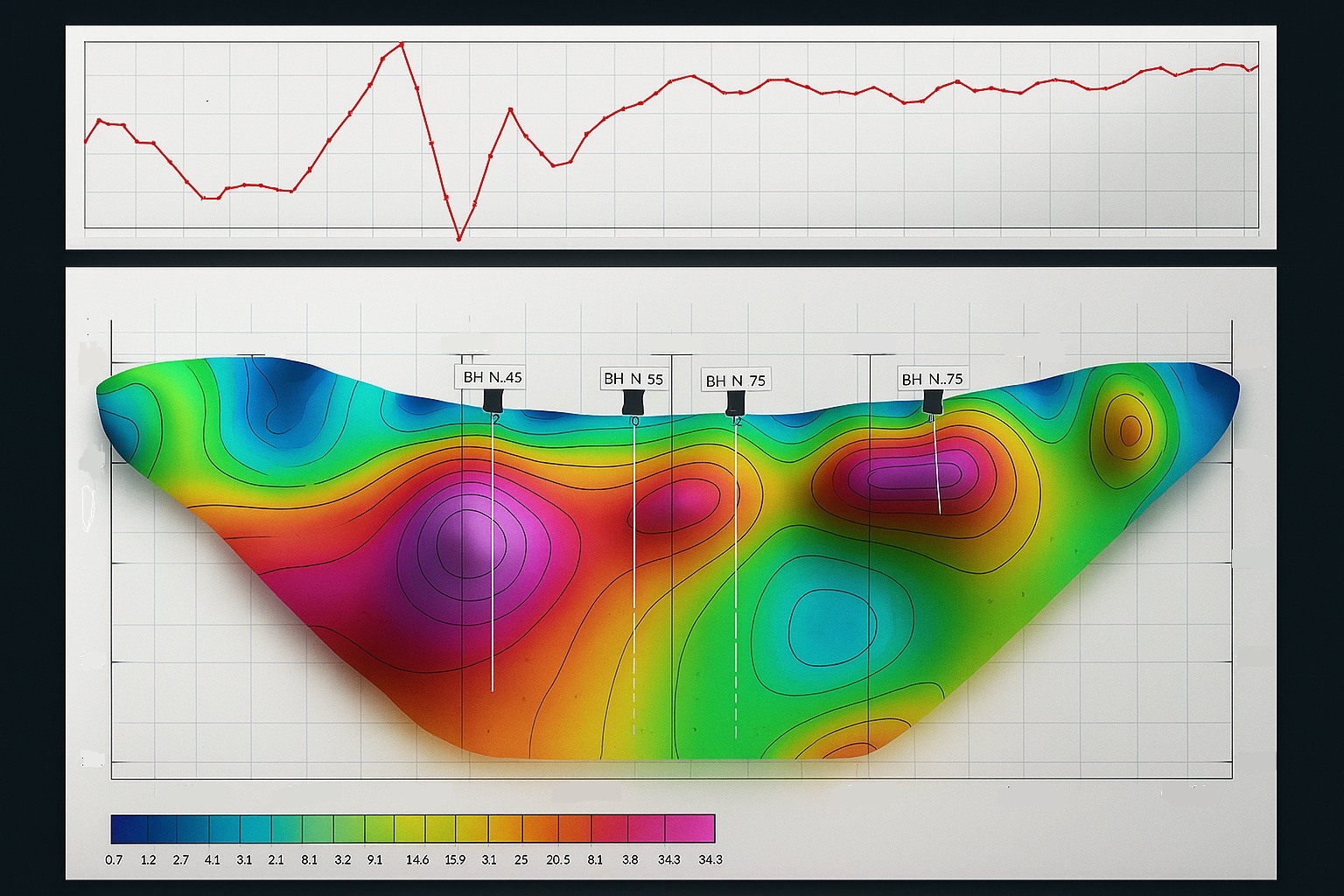
Based on geological interpretations indicating a massive sulfide-type deposit, and following the identification of fault structures and magnetic lineaments through comprehensive ground magnetic surveys across the entire area, geophysical investigations using the Induced Polarization–Resistivity (IP–RS) method were subsequently conducted to delineate zones of sulfide mineralization. In this phase, approximately 6,800 geoelectric measurement points were collected, which successfully identified veins and zones of sulfide enrichment associated with the mineralized system.
Preliminary Drilling in the Northern Zone
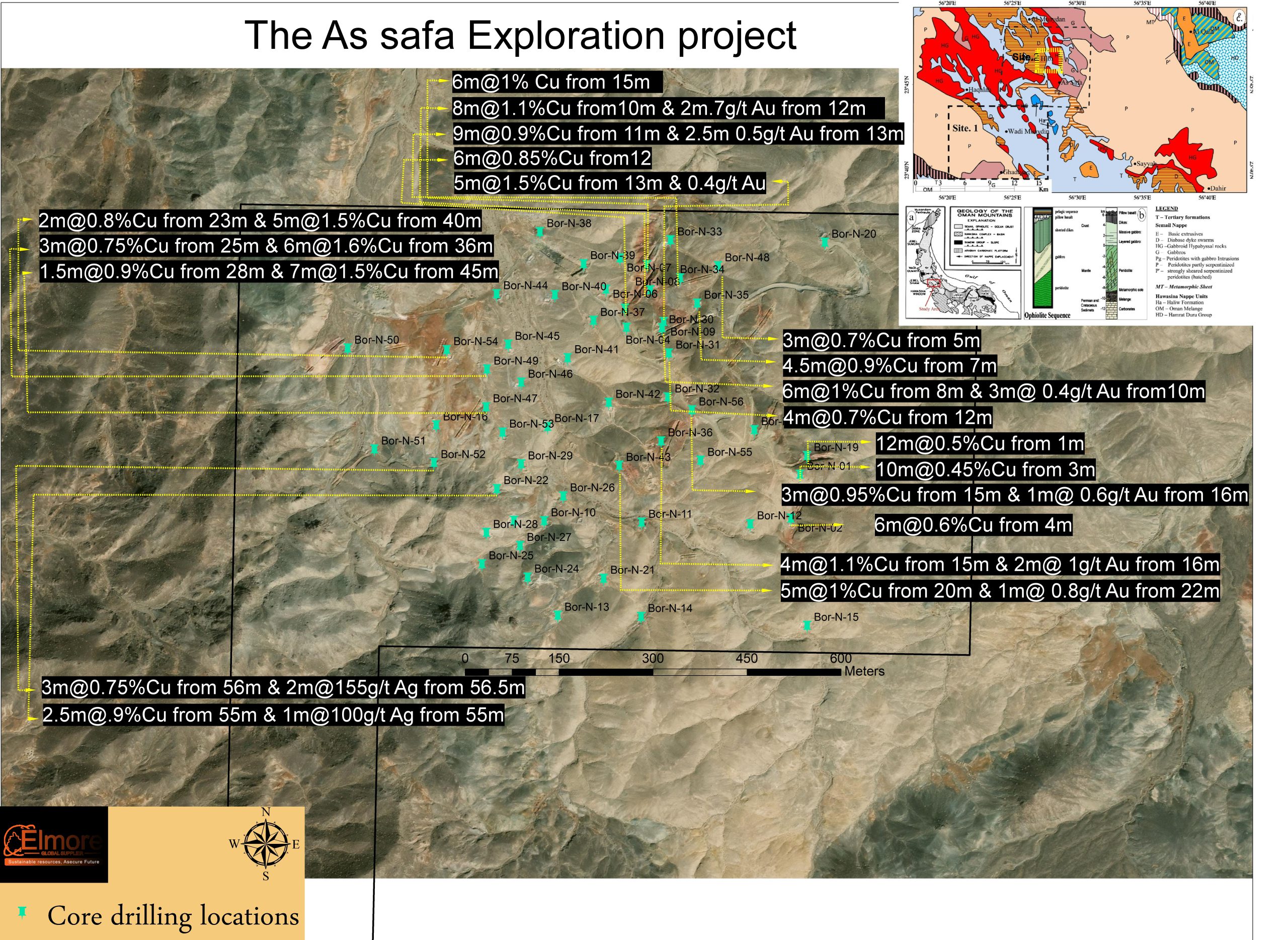
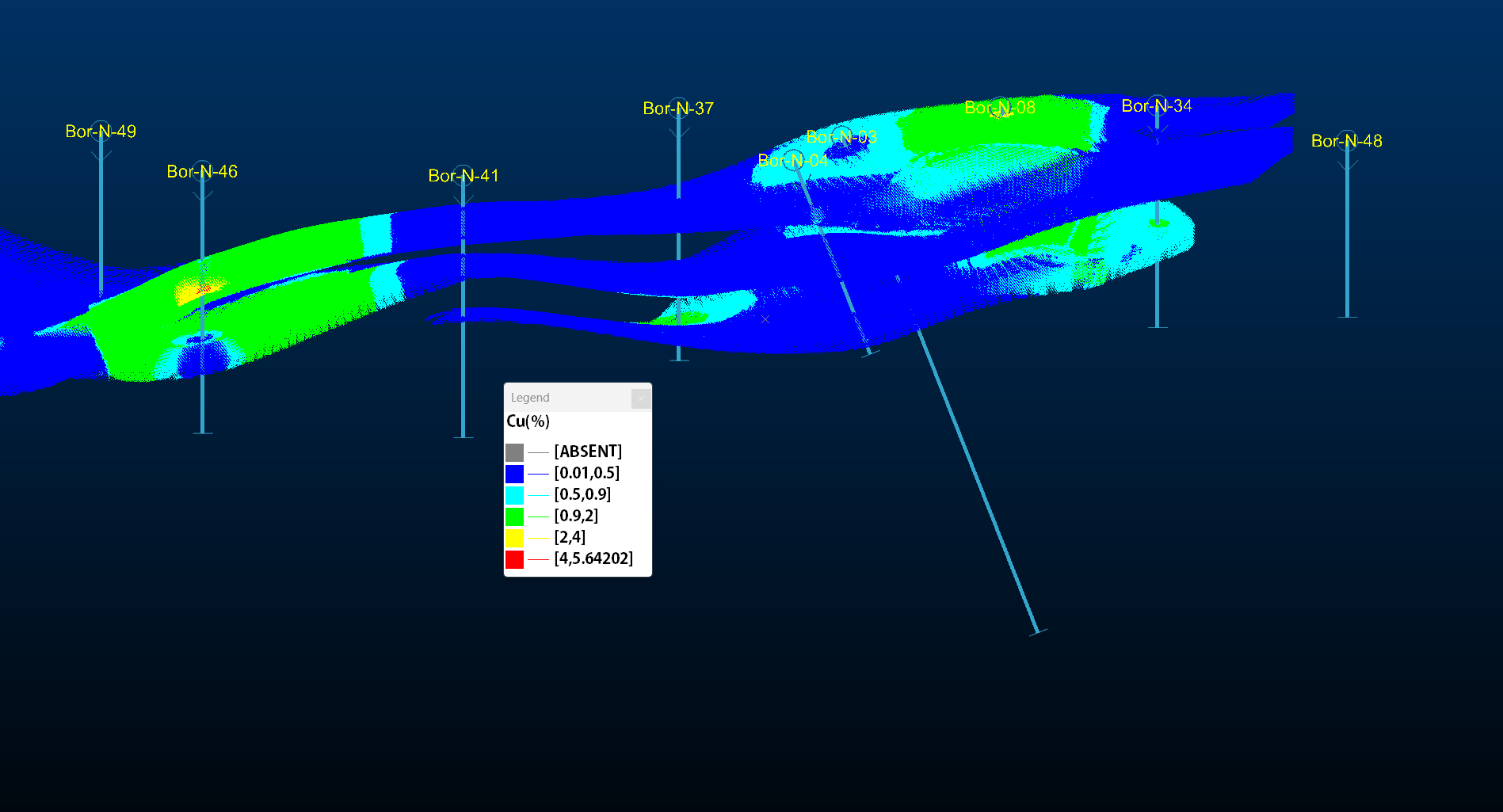
Mineralization in this area terminates toward the north and east. According to drill core logging data, the primary copper minerals are chalcopyrite and bornite. Gold is present as a by-product element, with an average grade of approximately 0.5 g/t. Based on the results from drill holes No. 4, 6, 7, 8, 30, 32, 34, and 37—drilled in the northern portion of the area with an average spacing of about 90 meters—the mineralized zone exhibits thicknesses ranging from 3 to 9 meters. Copper grades within this zone vary from 0.7% to 1.5%, with an average grade of 1.08%. Structurally, the mineralized lens extends westward and dips toward the south.
Preliminary Drilling in the Eastern Zone
In this area, copper and gold mineralization has also been reported, primarily in the form of chalcopyrite. Drill holes No. 1 and 19 intercepted mineralized zones with considerable thicknesses but relatively lower copper grades. In contrast, drill holes No. 2, 36, and 43 intersected thinner zones, yet with higher copper grades averaging around 1%. Additionally, gold was reported in these holes with an average grade of approximately 0.8 g/t.
Reconnaissance Drilling in the Western Part of the License Area
Mineralization in this area has occurred in the form of two distinct lenses. The first lens is located at an approximate depth of 25 meters with an average thickness of 2 meters, while the second lens appears at around 40 meters depth with an average thickness of 6 meters. Notably, silver has been identified as a by-product element in this zone, with a significant average grade of 120 g/t.